
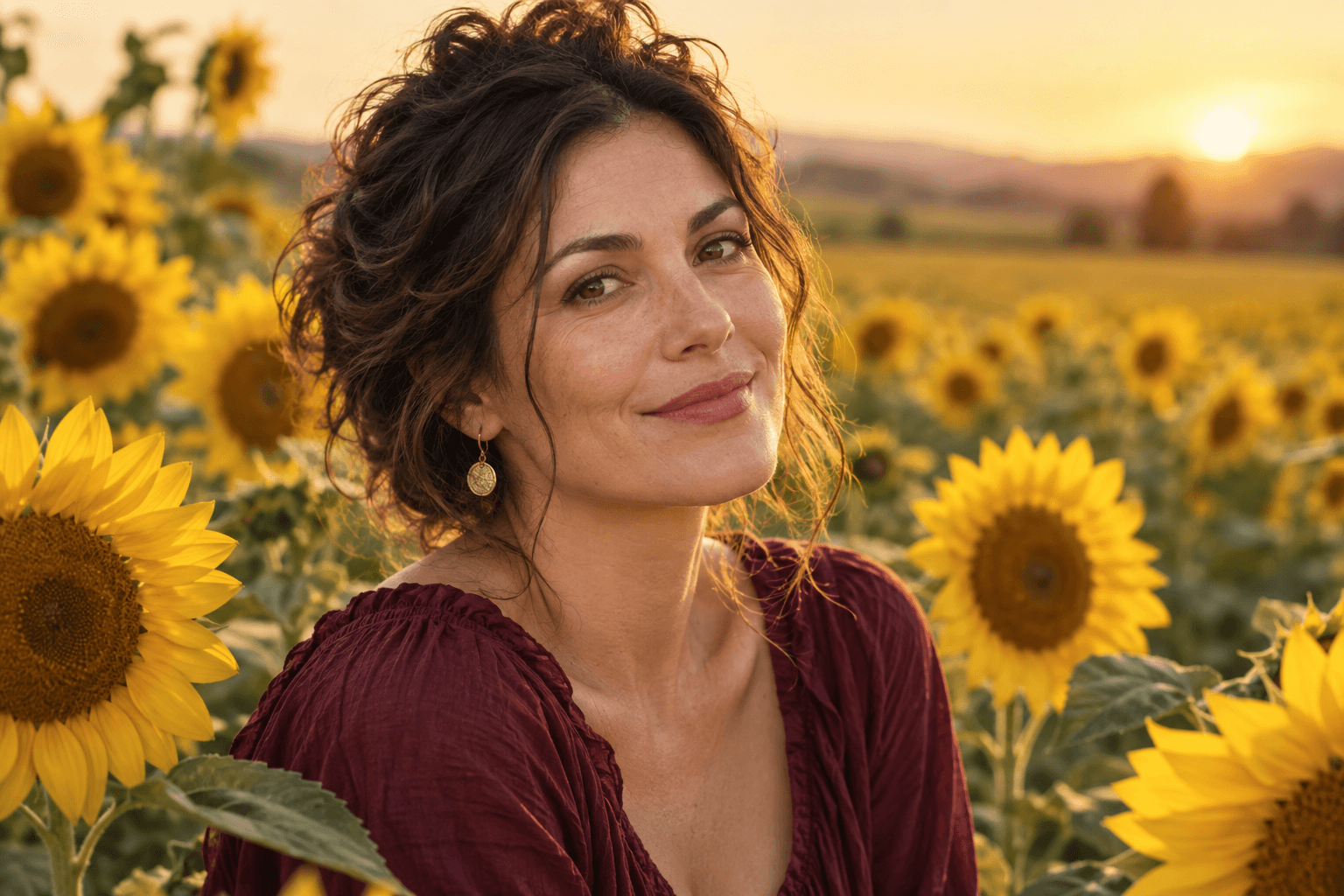
What does your profile picture say about you? Starting with sunflowers
The profile picture someone chooses for social media is rarely entirely random.
We select one photo from many, brighten a face, choose a flower or cartoon character, or leave the image deliberately muted. We may not analyze those decisions, but they can express the same underlying question: How do I want other people to see me, and what do I need right now?
This means profile pictures can contain useful patterns. They are clues about self-presentation, not a shortcut to diagnosing a complete personality.
An avatar may show not only who someone is, but who they want to become.
Treat it as one clue about an inner need. A profile name, bio, posts and real interactions provide the context.
Why can a profile picture reflect an inner need?
A social avatar helps people recognize an account, but it is also a deliberately selected public self. Offline, we cannot control every moment another person sees. Online, we can choose the image, colors, crop and amount of personal information we reveal.
Those choices can be influenced by taste, identity, current mood and relationship needs. Research on avatar use and self-presentation has similarly described how people use avatars to express traits, preferences or a present state while controlling how much they disclose. One study focused on young female Douyin users, so it should not be generalized to every platform or population. Its specific scope is available in this study of avatar use and self-presentation.
Sunflower avatars: wanting kindness and choosing to give warmth
In a public video, psychological consultant Gao Yuan offers a deeper reading of people who use sunflowers or bright flowers as avatars. He suggests they may have spent a period giving to others and feeling hurt, then gradually adjusted their attitude. They still hope to be treated kindly and choose an image that also gives light to other people.
This is more interesting than saying a sunflower simply means optimism. Optimism can be a choice made after difficulty. The avatar may express both a value the person identifies with and the emotional energy they are trying to restore.
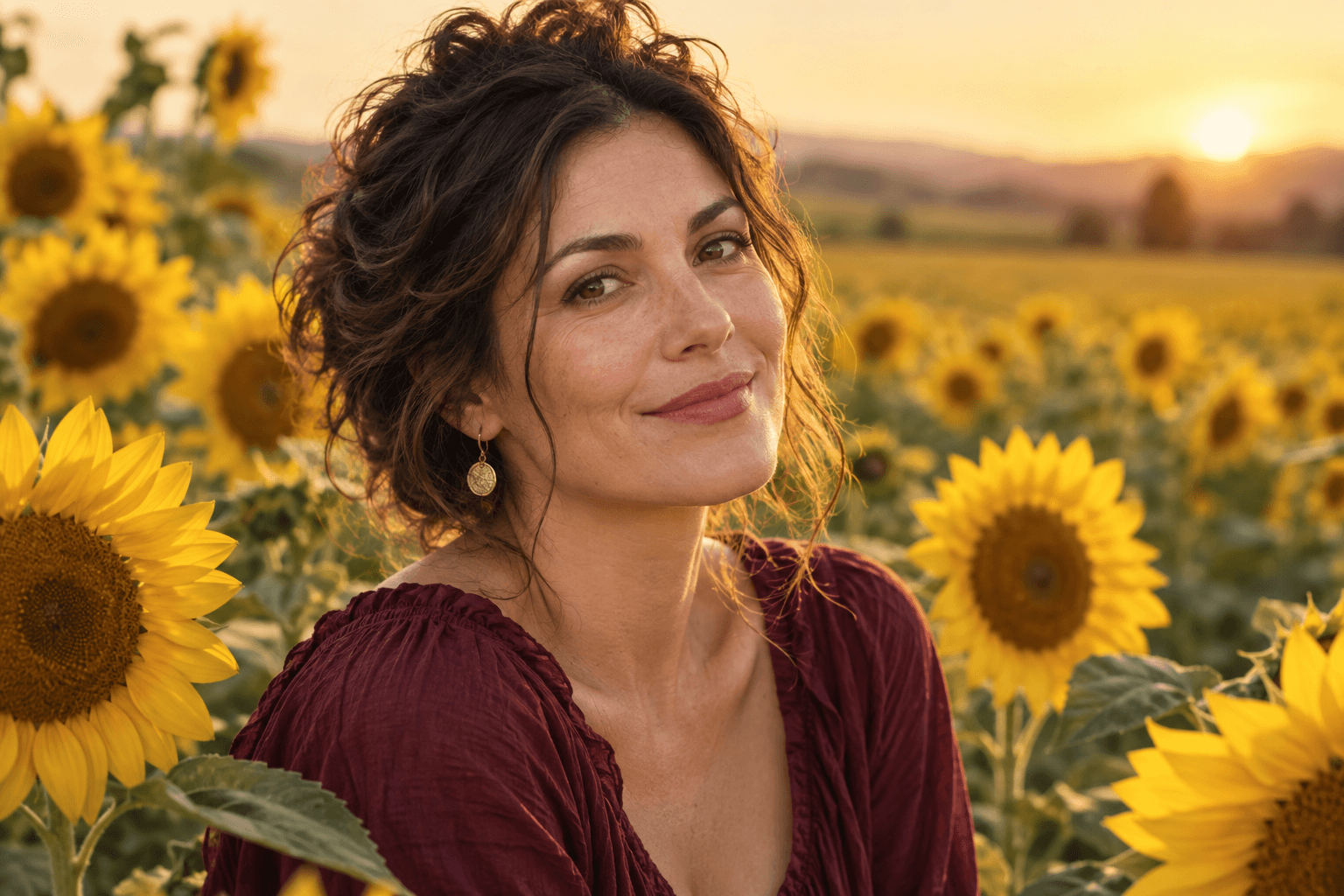
AI-created demo model. The adult subject is fictional and is shown only as a visual example.
Not every person using a sunflower has the same story. Some simply like yellow or flowers. The useful question is whether someone repeatedly chooses the same symbols and whether those symbols match the rest of their profile.
Muted or grey avatars: a lower-saturation inner state
A grey, dim or blurred avatar can create a feeling of distance, quiet, tiredness or a wish not to be disturbed. It may reflect a current phase rather than a lifelong personality.
Some people simply love monochrome photography. Others may choose a low-energy image because it says something they do not want to write directly. A recent change becomes more meaningful when the bio and posts have also become subdued.
Highly polished avatars: a need to be seen and affirmed
Another profile picture may be carefully perfected: bright light, polished skin, considered clothing and a background that puts the subject at the center of the stage.
This can express taste and attention to quality. It can also contain a wish to be noticed, recognized or affirmed. Wanting to be seen is not automatically vanity; people naturally need response and connection.
A polished avatar that preserves recognizable features can strengthen confidence and a personal brand. When even close friends would struggle to recognize the person, the ideal self may be temporarily overpowering the real one.
A large head and small body: identifying with intelligence and ideas
Some cartoon avatars exaggerate the head and shrink the body. Gao Yuan interprets this proportion as an emphasis on intelligence and thought.
Visually, the large head does direct attention toward the face, expression and mind while reducing the importance of the body or environment. Someone choosing it may want to be known first for ideas, intelligence, humor or an inner world.
Context still matters because large-headed proportions are common in cute illustration. The reading becomes more convincing when the profile name, bio and posts also emphasize knowledge or thinking.
How to read a profile picture more responsibly
Look for repeated choices
One change may be seasonal or impulsive. Colors, poses and symbols that appear repeatedly are more likely to relate to a stable identity.
Read the avatar, name, bio and posts together
The avatar is the most visible clue, not the only one. The profile name shows how someone labels themselves, the bio shows what they emphasize and posts show how they interact with the world.
Separate the real self from the ideal self
Some avatars express a present reality; others express a person someone hopes to become. Another may simply protect privacy. Distance from real life is itself a clue, but not proof of deception.
Say “may,” not “must”
Avatar interpretation can support curiosity and conversation. It cannot establish mental health, relationship status, morality or life history. Understanding a person still requires dialogue and time.
Designing an avatar can clarify your own message
Before choosing a style, ask yourself:
- Should the first impression feel warm, professional, mysterious or playful?
- Am I showing my present state or an ideal state I want to move toward?
- Which facial features, colors or symbols are truly mine rather than a generic template?
Once those answers are clear, a style reference becomes more than decoration. It helps the avatar express something coherent while keeping you recognizable.
Let your avatar express a need without losing your identity.
Prepare one clear photo and one reference that represents your current direction, then sign in when you are ready to create. New accounts receive 3 free creations; no card is required.
Create a profile picture that feels like meThis article was reconstructed and independently expanded from a public Douyin video by 高源心里话 about sunflower avatars and personality. It preserves the video’s core observations about sunflowers, muted images, polished portraits, exaggerated proportions and account self-presentation without reproducing its wording or frames.
For more ways to shape your online identity, browse 36 profile picture style ideas.